
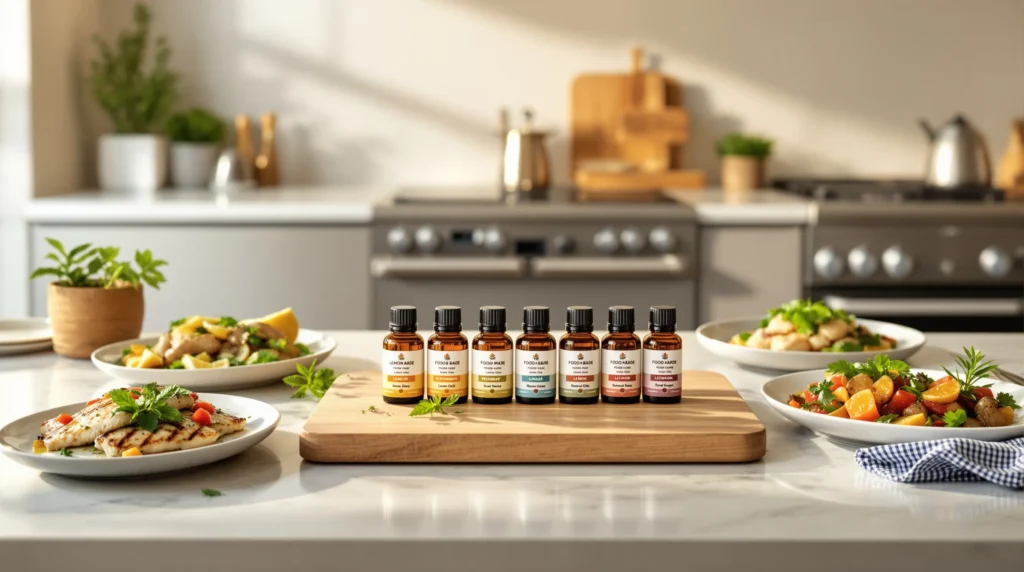
Picture this: You’re standing in your kitchen, a steaming bowl of pasta in front of you. You reach for a tiny bottle, add just one drop, and suddenly the whole dish bursts with fresh basil flavor—like you just picked it from the garden. That’s the magic of food grade essential oils for cooking. If you’ve ever wished your meals could taste brighter, fresher, or just a little more exciting, you’re in the right place.
What Are Food Grade Essential Oils for Cooking?
Food grade essential oils for cooking are concentrated plant extracts that are safe to eat. Unlike regular essential oils, which might be made for aromatherapy or cleaning, food grade oils meet strict safety standards. They’re tested for purity and labeled as safe for consumption. Think of them as supercharged flavor boosters—one drop can do what a handful of herbs or spices might struggle to achieve.
How Are They Made?
Producers steam-distill or cold-press plants to extract their essential oils. For example, lemon oil comes from the rind, while peppermint oil comes from the leaves. The result is a tiny bottle packed with intense flavor and aroma. But here’s the part nobody tells you: not all essential oils are safe to eat. Only those labeled “food grade” or “GRAS” (Generally Recognized As Safe) by the FDA should ever go near your plate.
Why Use Food Grade Essential Oils for Cooking?
If you’ve ever chopped a mountain of garlic or zested a dozen lemons, you know fresh flavor takes work. Food grade essential oils for cooking save time and deliver consistent results. They’re shelf-stable, so you don’t have to worry about wilted herbs or moldy citrus. Plus, they let you experiment with flavors you might not find at the grocery store—think kaffir lime, cardamom, or even black pepper oil.
- Intensity: One drop can flavor an entire dish.
- Convenience: No chopping, peeling, or prepping.
- Variety: Access to rare or seasonal flavors year-round.
- Consistency: Same taste every time, no matter the season.
Here’s why that matters: If you’re a home cook who loves experimenting, or a busy parent who wants dinner on the table fast, food grade essential oils for cooking can be a game-changer. But if you’re a strict traditionalist who loves the ritual of chopping and prepping, you might prefer sticking to fresh ingredients.
How to Use Food Grade Essential Oils for Cooking
Let’s break it down. Using food grade essential oils for cooking isn’t as simple as dumping them in like vanilla extract. They’re potent—sometimes too potent. Here’s how to get it right:
- Start Small: Always begin with one drop. You can add more, but you can’t take it out.
- Dilute: Mix oils with a fat (like olive oil or butter) or a liquid (like cream or broth) before adding to your dish. This helps distribute the flavor evenly.
- Add at the Right Time: Some oils, like citrus or herbs, lose their punch if cooked too long. Add them at the end for maximum flavor.
- Pair Wisely: Match the oil to the dish. Lemon oil brightens seafood, while cinnamon oil adds warmth to baked goods.
If you’ve ever over-salted a soup, you know how easy it is to go overboard. The same goes for essential oils. I once ruined a batch of brownies with too much peppermint oil—my family still teases me about “toothpaste brownies.” Learn from my mistake: less is more.
Popular Food Grade Essential Oils for Cooking
Not all oils are created equal. Some shine in sweet dishes, others in savory. Here are a few favorites:
- Lemon Oil: Perfect for salad dressings, fish, and desserts. One drop equals the zest of a whole lemon.
- Basil Oil: Adds fresh, herbal notes to pasta, pizza, and sauces.
- Peppermint Oil: Great in chocolate desserts, teas, and even cocktails.
- Rosemary Oil: Ideal for roasted meats, potatoes, and bread.
- Ginger Oil: Spices up stir-fries, marinades, and cookies.
Here’s a tip: Always check the label. Only use oils that say “food grade” or “safe for internal use.” If you’re unsure, skip it. Your taste buds—and your stomach—will thank you.
Safety Tips: What Nobody Tells You
Let’s get real. Food grade essential oils for cooking are powerful, but they’re not risk-free. Here’s what you need to know:
- Check for Allergies: Some people react to certain oils, even in tiny amounts.
- Store Safely: Keep oils away from kids and pets. A little goes a long way, and too much can be dangerous.
- Don’t Substitute Recklessly: Not every essential oil can replace its fresh counterpart. For example, oregano oil is much stronger than dried oregano—use with caution.
- Consult a Pro: If you’re pregnant, nursing, or have health conditions, talk to your doctor before using essential oils in food.
Here’s the part most people skip: Essential oils can interact with medications or cause digestive upset if overused. Always respect the drop.
Recipes to Try with Food Grade Essential Oils for Cooking
Ready to experiment? Here are three simple ways to use food grade essential oils for cooking tonight:
- Lemon Vinaigrette: Whisk together 2 tablespoons olive oil, 1 tablespoon white wine vinegar, 1 drop lemon oil, salt, and pepper. Drizzle over greens.
- Herbed Butter: Soften 1 stick of butter, add 1 drop basil oil and 1 drop rosemary oil, mix well. Spread on warm bread or melt over steak.
- Peppermint Hot Chocolate: Stir 1 drop peppermint oil into a mug of hot cocoa. Top with whipped cream.
If you’ve ever wanted to impress dinner guests with something unexpected, this is your secret weapon. Just remember: always taste as you go.
Where to Buy Food Grade Essential Oils for Cooking
Not all essential oils are created equal. Look for reputable brands that offer third-party testing and clear “food grade” labeling. Some trusted names include doTERRA, Young Living, and LorAnn Oils. You can find them online or at specialty food stores. Always read reviews and check for certifications.
Final Thoughts: Should You Try Food Grade Essential Oils for Cooking?
If you love bold flavors, crave convenience, and enjoy experimenting, food grade essential oils for cooking can open up a whole new world. But they’re not for everyone. If you prefer the slow, hands-on approach, or if you’re sensitive to strong flavors, you might want to stick with fresh ingredients. Either way, the next time you want to wow your taste buds—or your dinner guests—remember: sometimes, the biggest flavor comes in the smallest bottle.