
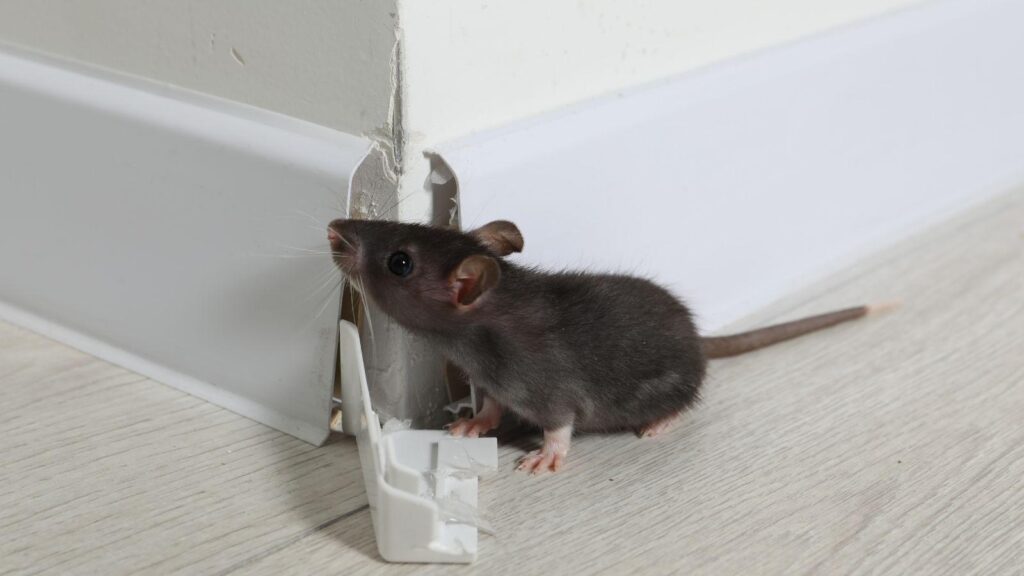
Rodents are some of the sneakiest houseguests around. By the time most homeowners actually spot a mouse or rat scurrying across the kitchen floor, the infestation has usually been building for weeks, sometimes months. Catching the early warning signs can save you from chewed wiring, contaminated food, and a much bigger cleanup job down the road.
Here's what to watch for.
1. Droppings in Cabinets or Along Walls
Small, dark, pellet-shaped droppings near food storage areas, behind appliances, or along baseboards are usually the first real clue. Mouse droppings are about the size of a grain of rice; rat droppings are noticeably larger. If you're finding fresh ones daily, the population is likely growing, not just passing through.
2. Gnaw Marks on Wood, Wires, or Packaging
Rodents' teeth never stop growing, so they gnaw constantly to keep them filed down. Look for chewed corners on cardboard boxes, shredded insulation around pipes, or small notches in wooden cabinetry. Chewed electrical wiring is especially concerning, since it's a genuine fire hazard, not just a nuisance.
3. A Musty, Ammonia-Like Smell
Rodent urine has a distinct, strong odor that tends to concentrate in enclosed spaces like under sinks, inside wall voids, or in attics. If a room suddenly smells "off" for no obvious reason, it's worth investigating the usual hiding spots.
4. Scratching Sounds at Night
Mice and rats are nocturnal, so scratching, scurrying, or light thumping in the walls or ceiling after dark is a classic sign. It's easy to dismiss as "the house settling," but persistent noise at the same time each night usually means something's actually moving around up there.
5. Nesting Materials Tucked Away in Storage
Shredded paper, fabric scraps, insulation, or dried plant material bundled into a nest-like shape in a drawer, garage corner, or crawl space is a strong sign rodents have settled in for the long haul, not just passing through for food.
What to Do If You Spot These Signs
Sealing obvious entry points, storing food in airtight containers, and cleaning up clutter that offers hiding spots all help, but once rodents are established, a single snap trap usually isn't enough to close out an active problem. Retailers like PestAside carry a range of humane cage traps, electric traps, and repellent options specifically built for these early-to-moderate infestation stages, which makes it easier to match the tool to the actual severity of what you're dealing with instead of guessing.
Catching these signs early is the difference between a quick fix and a full-blown infestation, so don't wait for the "I finally saw one" moment to take action.